Samsung's $58.4 Billion Quarter: Why Memory Chips Just Overtaken NVIDIA in the AI Profit Race
A striking visual has been circulating online: Samsung’s modern headquarters towering with $58.4 BILLION emblazoned at the top, while a neighboring NVIDIA building shows $49.1 BILLION. The message is clear — Samsung has overtaken NVIDIA to become the world’s most profitable tech company in this quarter.
This isn’t marketing spin. It’s the latest earnings reality in July 2026.

The Stunning Numbers Behind Samsung’s Breakthrough
Samsung Electronics guided for a Q2 2026 operating profit of approximately 89.4 trillion KRW (about $58.4 billion). This represents a roughly 19-fold increase (around 1,810%) from the same period last year. Revenue is projected to hit a record 171 trillion KRW.
Samsung’s semiconductor division is on pace for 2026 profits that exceed its cumulative earnings over the past 40 years in the chip business. NVIDIA, the long-time leader in AI hardware thanks to its GPUs, recently posted strong operating income in the $53+ billion range for a comparable quarter. Samsung now claims the top spot — at least temporarily.
Notably, Samsung shares dipped after the announcement despite beating expectations, a classic "sell the news" reaction amid concerns over future capex and sustainability.
The Real Driver: AI’s Insatiable Hunger for Memory
Why the massive turnaround? High-Bandwidth Memory (HBM) — the specialized, ultra-fast memory essential for powering today’s AI accelerators.
Every major AI data center relies on massive GPU clusters, and those GPUs need stacks of HBM right beside them for the extreme bandwidth required by large language models and complex computations. Samsung, as one of the world’s biggest memory suppliers, is capitalizing on this demand.
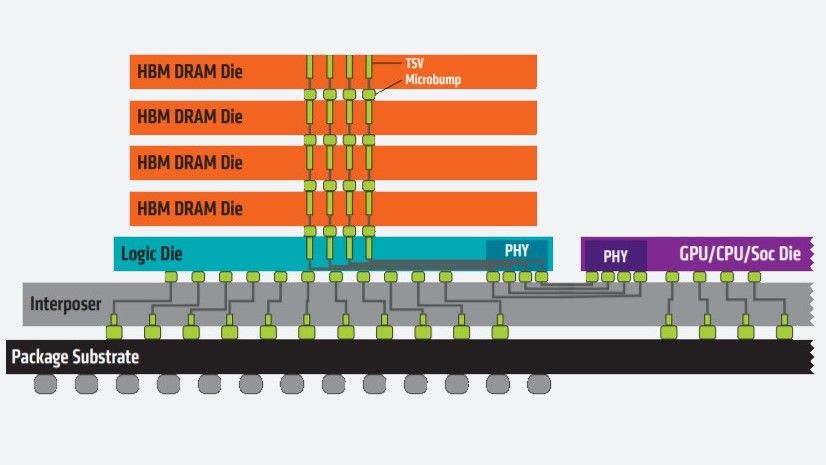
The boom isn’t limited to premium HBM alone. AI workloads are driving higher prices and volumes across DRAM and enterprise NAND flash as well. Tight supply has given memory makers significant pricing power.
Samsung’s Device Solutions (chip) division — particularly its memory business — accounted for the overwhelming majority of the company’s recent profits.
The AI Boom Enters Its Infrastructure Phase
For the past couple of years, the AI story centered heavily on NVIDIA’s GPUs. That narrative is evolving rapidly.
We’re now in the inference-at-scale and agentic AI era. This means running thousands of AI models simultaneously, handling massive context, retrieval, and autonomous actions. All of this demands enormous memory capacity and bandwidth — far beyond just training runs.
The result? Profits are broadening across the entire AI stack: GPUs, memory, advanced packaging, power systems, networking, and cooling. Samsung’s results are the clearest evidence yet that the “picks and shovels” of the AI gold rush are delivering enormous value.

What This Means for the Tech Industry in 2026+
- Investors: Hardware and semiconductor companies are seeing renewed interest. While software remains crucial, the physical infrastructure layer now commands serious margins.
- Careers & Talent: Demand is surging for semiconductor engineers, memory architects, process technologists, and hardware systems experts. Hardware skills are back in a big way.
- Business Opportunities: The AI buildout creates openings across the global supply chain — from components and prototyping to manufacturing services.
- Geopolitics: Samsung’s success strengthens South Korea’s position in the memory market amid ongoing global chip tensions and diversification efforts.
Of course, risks remain. The memory industry is famously cyclical. Massive new fab investments could eventually lead to oversupply, and competition (including from SK Hynix) is intense. Execution on next-generation HBM and geopolitical factors will matter.
The Bottom Line
Samsung’s record quarter isn’t just about one company beating another in a single reporting period. It’s a powerful signal that AI’s profit engine is shifting toward the full infrastructure stack.
The companies and professionals who master the physical foundations of AI — not just the flashy software or single-chip stories — will be best positioned for the years ahead.
The gold rush continues. It’s just moving deeper into the mine.
What do you think? Is this the beginning of a sustained memory and infrastructure supercycle, or will we see the traditional boom-bust pattern return? Share your thoughts in the comments below!


Comments
Post a Comment