Reusable Rockets Just Got More Creative: China’s Sea Net Catch, Japan’s Precise Hop, and the Real Meaning of the New Space Race
In the span of just a few days in July 2026, three different nations demonstrated three very different ways to bring a rocket stage safely back to Earth. China snagged its Long March-10B booster with a massive net on a floating sea platform. Japan’s JAXA RV-X prototype performed a controlled hover, shifted sideways, and landed on its legs after a short flight. And SpaceX continues to perfect its dramatic mechanical-arm “catch” on the launch tower for Starship’s Super Heavy booster.
At first glance, it looks like another chapter in great-power competition. But look closer, and something more profound is happening. This isn’t just about who lands first or who looks cooler doing it. It’s about engineering creativity, cost reduction, and a future in which access to space becomes more routine, more affordable, and more open to everyone.
What Actually Happened
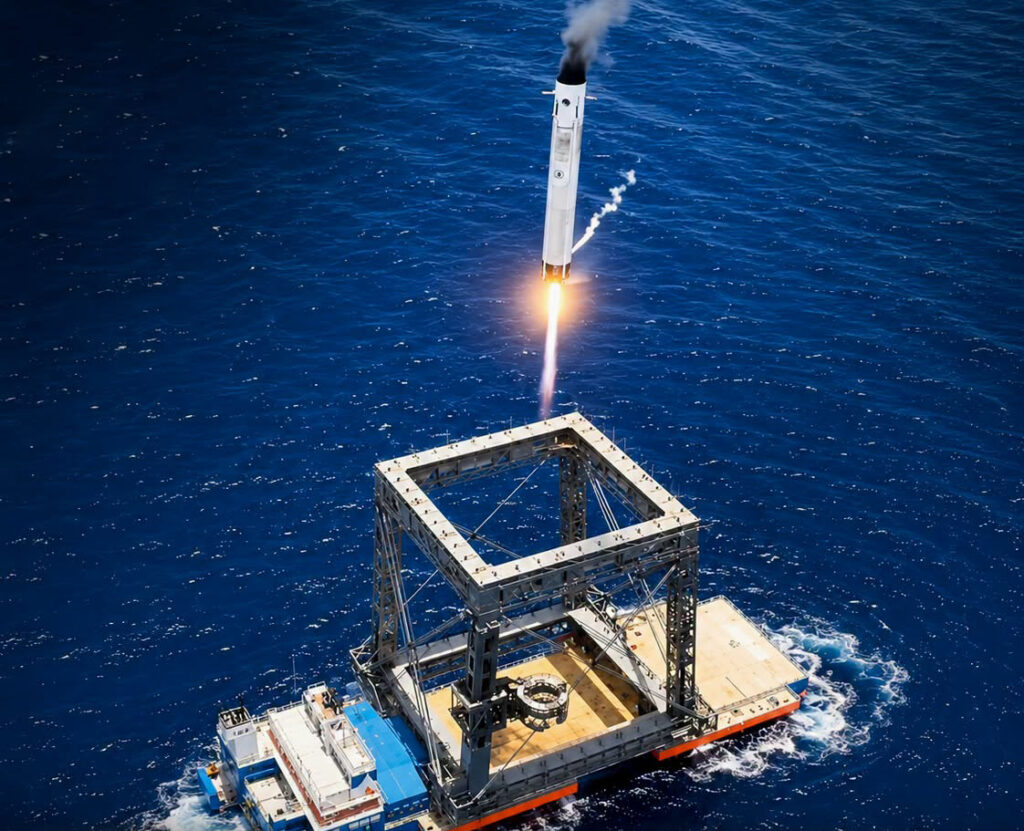
On July 10, 2026, China launched the Long March-10B from Hainan. Roughly six minutes after stage separation, the first-stage booster descended vertically and was captured by a tensioned net-and-cable system on the deck of the recovery vessel Linghangzhe. Hooks on the booster engaged the net, which absorbed the remaining energy while auxiliary cables secured it against waves. This marked the world’s first successful net-based recovery of an orbital-class rocket booster. The vehicle is designed for at least 16 metric tons to low Earth orbit in reusable configuration, and China plans to refly the recovered stage soon.
Just one day later, Japan’s space agency JAXA conducted the first flight test of its RV-X experimental reusable vehicle at Noshiro. The 7.3-meter-tall prototype lifted off, reached about 11 meters altitude, hovered, translated horizontally roughly 16 meters, and landed vertically — all in about 40 seconds. Its liquid hydrogen-oxygen engine had already completed more than 165 ground ignition tests. This low-altitude test proves precise control and landing systems for future reusable boosters.

These tests build on earlier private progress, such as Honda’s June 2025 flight of its 6.3-meter experimental reusable rocket, which reached 271 meters and landed with high precision. They also sit alongside SpaceX’s ongoing evolution from Falcon 9 leg landings to the tower-catch system.

Different Tools, Same Goal
Each approach reflects different engineering philosophies:
- SpaceX’s tower catch keeps recovery hardware on the vehicle or launch infrastructure for rapid turnaround.
- China’s net system shifts complexity to the sea platform, allowing the booster to carry more payload by avoiding heavy legs.
- Japan’s RV-X emphasizes precision hovering and translation, powered by efficient liquid hydrogen-oxygen engines.
No single method is universally superior — they are smart optimizations for different needs. The existence of multiple credible paths accelerates overall progress.
Why This Competition Matters
Reusable technology is the biggest lever for lowering launch costs. Every successful recovery multiplies the value of every kilogram sent to space. Lower costs enable more satellites, scientific missions, broadband constellations, and future exploration.
The spillover benefits extend to industries like electronics prototyping, custom PCBs, materials science, and precision manufacturing — areas that stand to gain from increased demand and technological cross-pollination.
Beyond Zero-Sum Thinking
Online discourse often turns these milestones into nationalistic narratives. The deeper reality is collaborative progress. History shows that fierce competition in aviation, computing, and other fields produced exponential gains that benefited the entire world. Space is no different.
By attacking the same hard problem with diverse approaches, engineers learn faster. Failures become shared data points. Innovations spread and improve. The winner is humanity gaining affordable, routine access to space.
Looking Ahead
Expect more tests, higher altitudes, faster reuses, and eventual routine operations. China will optimize its net system. Japan will scale RV-X insights. SpaceX will push Starship toward full reusability for lunar and Mars missions.
Over the coming decade, these parallel efforts could drive launch costs down dramatically, transforming the economics of space activity.
The proverb framing these events as future dominance captures competitive spirit, but the real story is optimistic: through creativity and determination, we are collectively making it possible for everyone to reach higher.
Space is vast. The more innovative the solutions, the faster we explore it.


Comments
Post a Comment